Nov 08, 2025
What Hunting Particles Taught Me About Debugging MRI Sequences
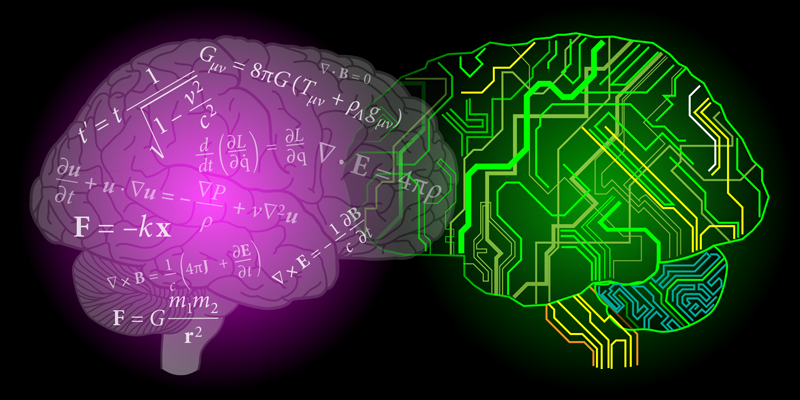
At CMS, the enemy was background: billions of proton collisions per second, almost all of them boring, hiding the handful of events you actually care about. In lung MRI, the enemy is artifact: banding, motion, off-resonance — noise wearing the costume of signal. The surprising thing is how transferable the debugging mindset is.
Rule 1: Distrust Beautiful Results
In particle physics, a too-clean peak usually means a bug in your selection, not a discovery. The same instinct applies when a reconstruction network produces a suspiciously crisp lung image. The first question is never "how good is this?" but "what would have to be wrong for this to look this good?"
Rule 2: Simulate Before You Measure
CMS analyses live and die by Monte Carlo simulation. I carry that habit into MRI: before trusting a shimming algorithm on a volunteer, I run it on synthetic field maps where the ground truth is known. If it fails where I can check, it will certainly fail where I can't.
Rule 3: Blind Yourself
Physicists deliberately hide the signal region until the analysis is frozen, to avoid fooling themselves. The clinical analogue: fix your evaluation metrics and test cases before looking at the outputs. Confirmation bias does not care whether the data came from a 27-km collider or a 0.55T magnet.
Different machines, same epistemology: assume you are wrong, design experiments that can prove it, and only then start believing your plots.